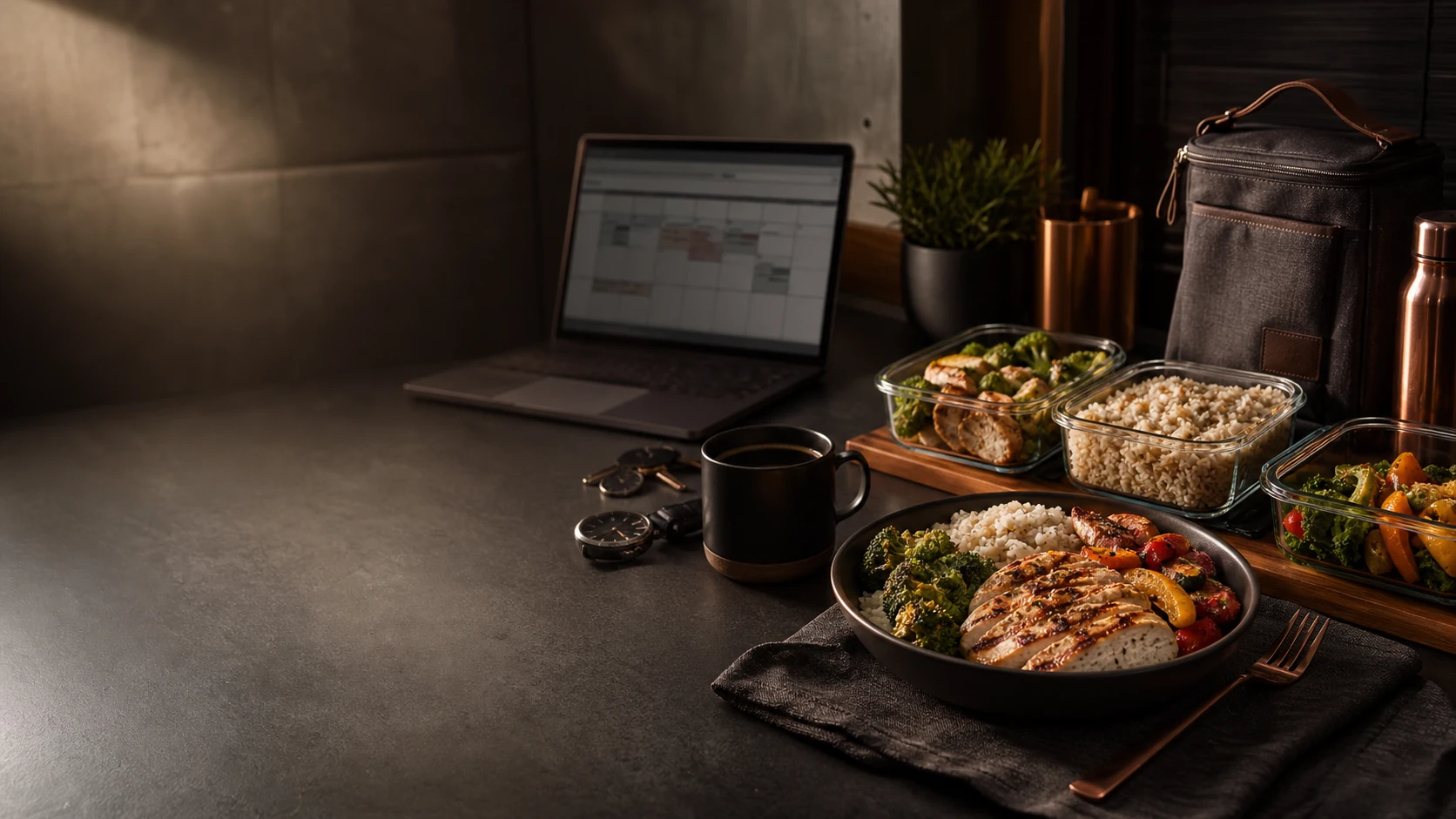
Tactical nutrition / Men over 40
The Lunch System for Men Over 40
Published May 8, 2026 / Updated May 11, 2026
The problem is not willpower. It is the 12:18 meeting, the light breakfast, and the moment lunch gets handed to hunger instead of a plan. Build the floor Sunday, rescue the week Wednesday, and keep a fallback ready.
Build the floor: one protein engine, one base, vegetables, sauce, and a backup.
Save the week before Thursday lunch becomes a delivery-app decision.
Keep overflow portions ready for the day the fridge is empty.
Use a no-cook shelf or known restaurant order when the plan breaks.
Boundary
Food systems are personal context, not medical nutrition advice.
This meal-prep guide is a practical system for consistency, protein, food safety, and broken weeks. It is not medical nutrition advice; medical diets, allergies, diabetes care, eating disorders, and treatment decisions belong with qualified professionals.
- Educational field notes, not medical advice.
- No clinician reviewed this page.
- Use qualified professionals for diagnosis, treatment, medication, supplement, and testing decisions.
Use this page by situation
Start where the week is breaking.
You do not need the whole system at once. Pick the door that matches today, then come back for the rest when the week gives you room.
Cook two proteins, one base, easy vegetables, and two sauces before the week gets loud.
If it is WednesdayRescue Thursday and Friday.Use the grocery-store version instead of pretending you are starting another full prep day.
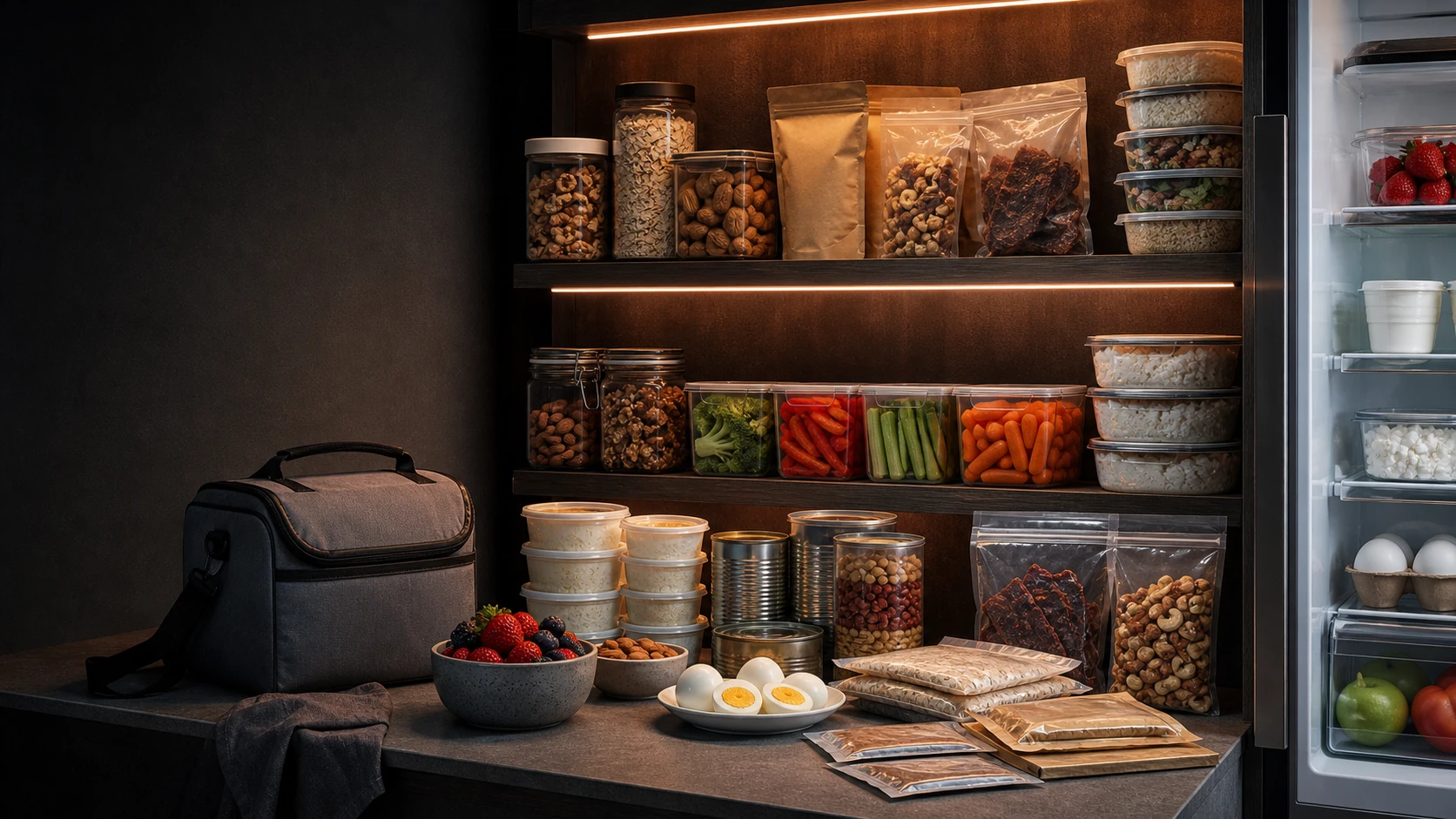
If the fridge is emptyMake the backup shelf do its job.Turn tuna, rice, yogurt, eggs, fruit, or rotisserie chicken into a seven-minute lunch.
If you are eating outChoose the order before hunger does.Pick the default restaurant move while calm: protein first, fiber second, water, move on.
Why lunch matters
Lunch is where a lot of men quietly lose the day.
Breakfast gets attention. Dinner gets the family table. Lunch is the quiet hinge. Skip it, underbuild it, or decide it while hungry and the rest of the day gets more expensive.
Coffee, a bar, or nothing feels efficient until the afternoon turns into low energy and snack drift.
The quick lunch becomes the combo meal, the side, the soda, and a heavier afternoon than the calendar needed.
A weak lunch often moves the damage into the evening: grazing, poor sleep, and a rougher morning.
Breakfast is light. The better lunch still has time to win.
The meeting runs long. The prepared option has to be visible.
This is where the drive-through, delivery, or snack plan tends to win.
A weak lunch can become the afternoon and evening problem.
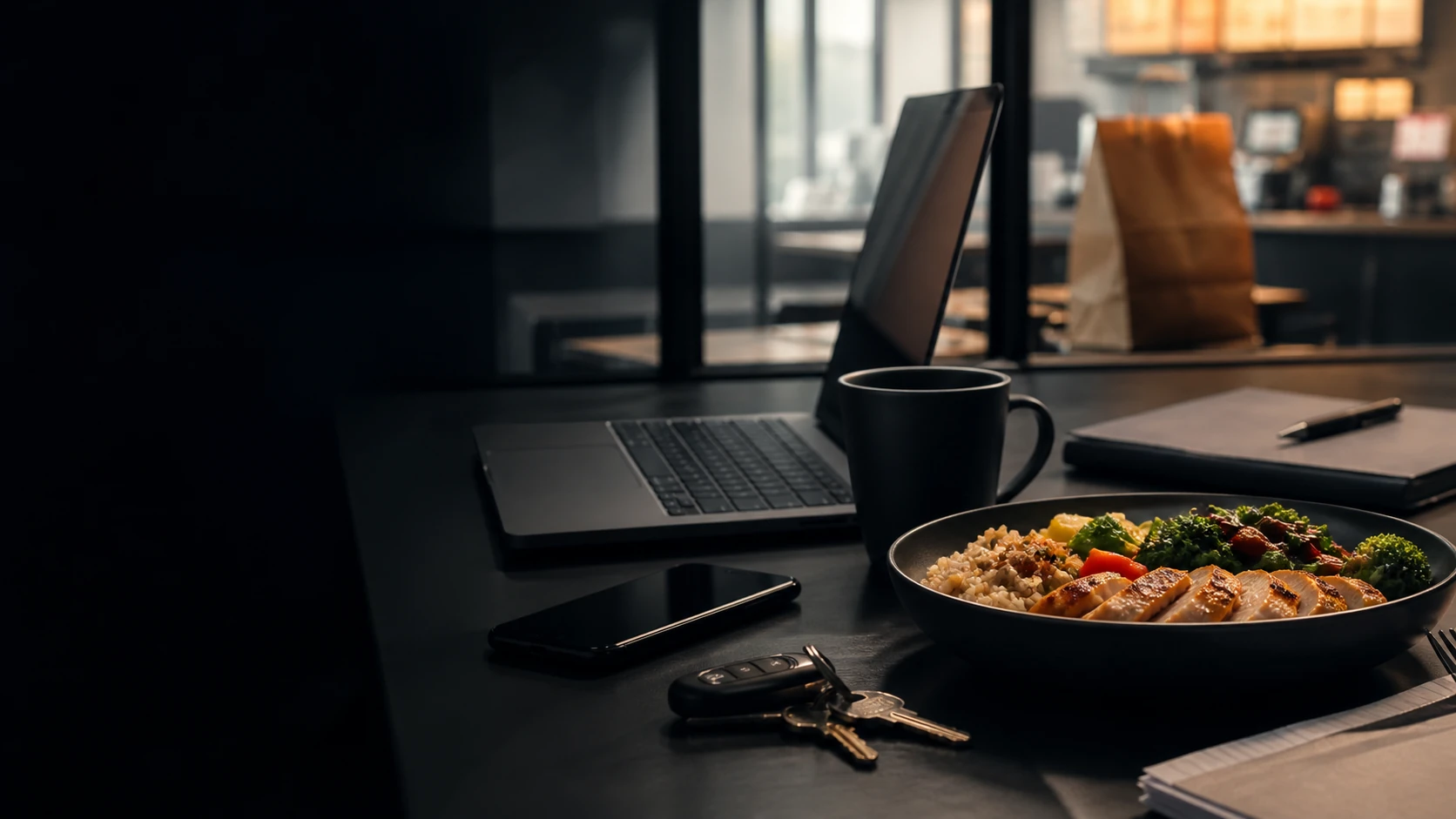
The noon failure point
Do not ask hungry you to make a systems decision.
You skip breakfast or grab something light. Work runs long. The meeting that was supposed to end at 11:30 ends at 12:18. Now you are hungry, annoyed, busy, and standing in front of the easiest option available.
The gas-station sandwich, delivery burger, or snack-until-dinner plan wins because it is already there.
Meal prep is not a fitness identity. It is insurance against tired, busy, hungry decision-making.
The Iron lunch formula
Protein, fiber, produce, flavor, storage.
The exact food matters less than the structure. Once lunch has a shape, you stop asking hungry you to invent a nutrition strategy at noon.
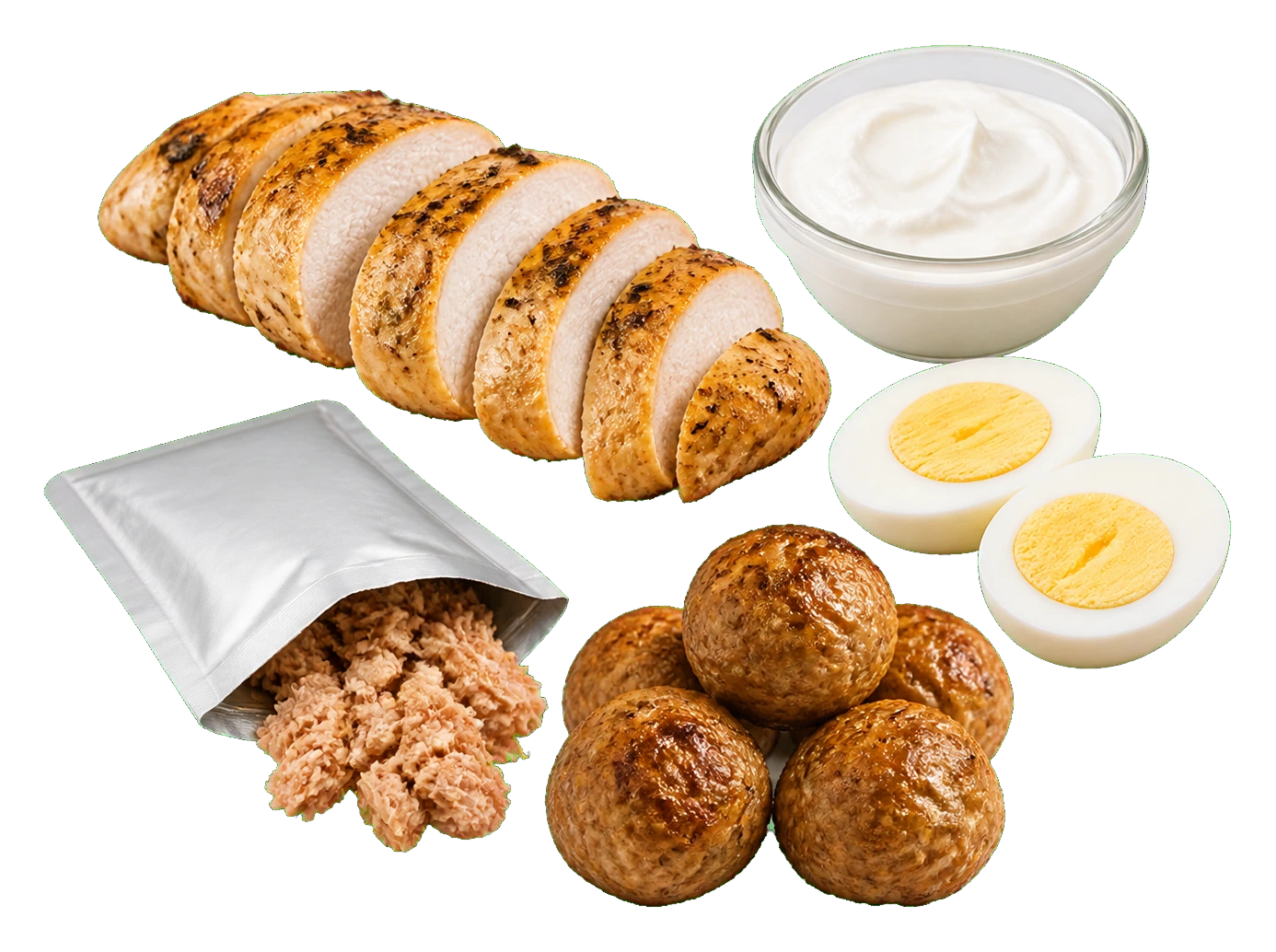
Protein anchor
Keeps lunch useful instead of just convenient.
- Chicken thighs or breast
- Turkey meatballs
- Lean ground beef
- Eggs
- Tuna or salmon packets
- Salmon
- Greek yogurt
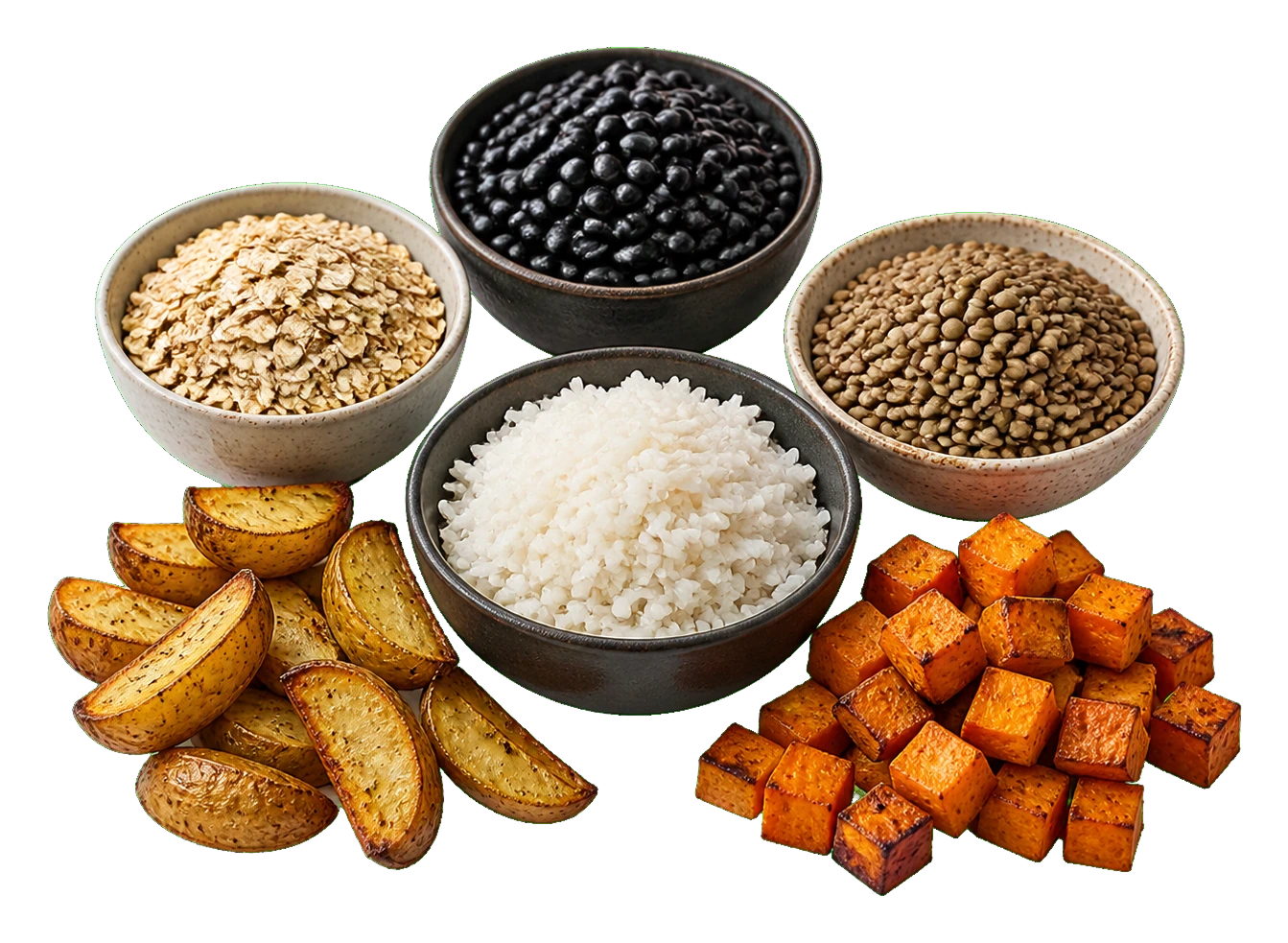
Fiber-rich base
Makes the meal filling and gives it structure.
- Beans
- Lentils
- Farro
- Quinoa
- Oats
- Potatoes
- Whole-grain pasta
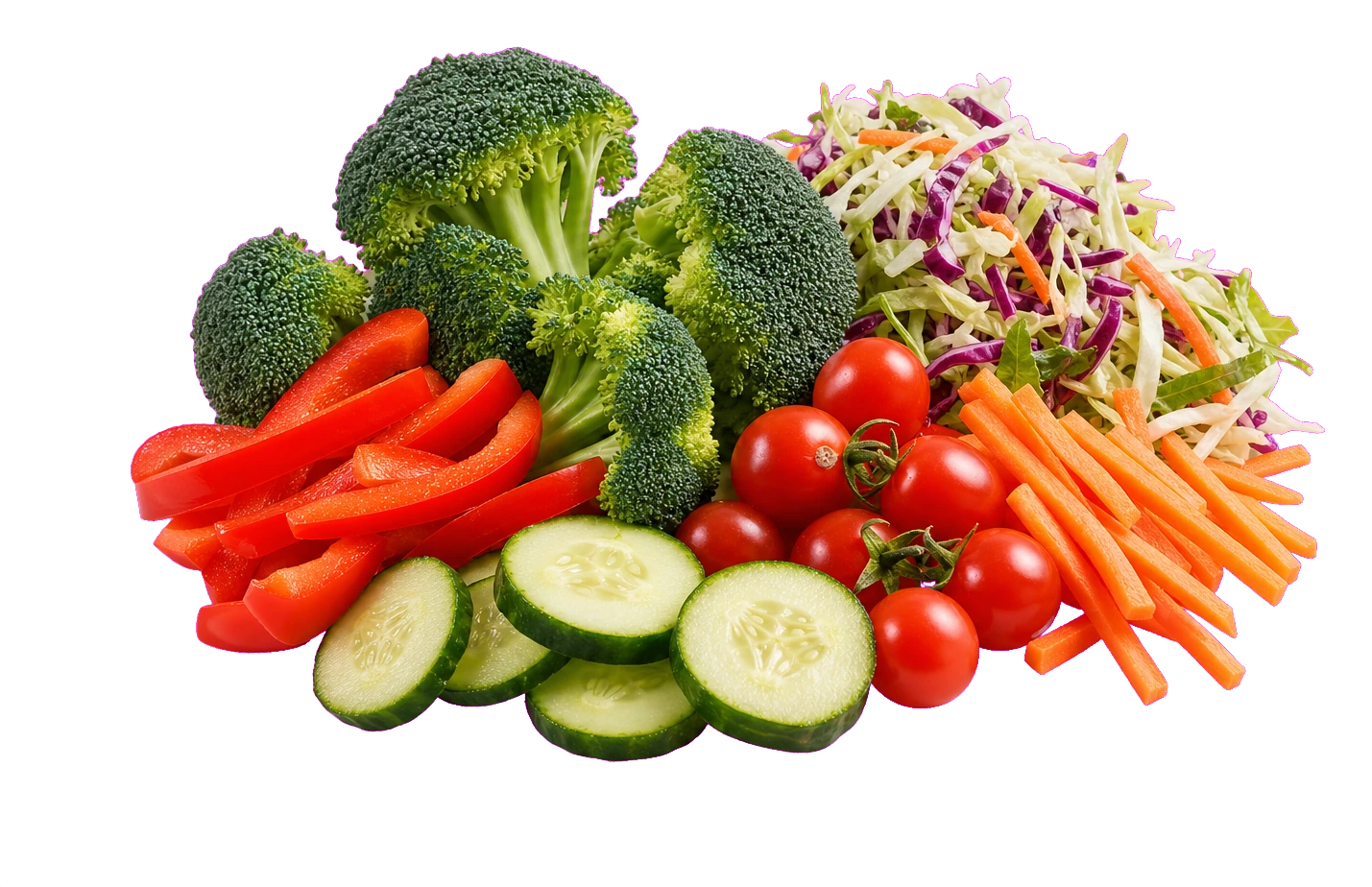
Vegetable volume
Adds texture, color, and a better plate without heroic cooking.
- Frozen broccoli
- Peppers
- Slaw
- Spinach
- Cucumbers
- Carrots
- Bagged salad
Flavor system
Keeps repeat meals from becoming punishment.
- Salsa
- Hot sauce
- Tzatziki
- Greek yogurt ranch
- Pesto
- Teriyaki
- Buffalo sauce
Storage plan
Turns bulk cooking into food you can actually trust.
- Shallow containers
- Date labels
- Fridge early
- Freeze overflow
- Sauces separate
- Reheat fully
Do this first
Make Wednesday lunch boringly safe before you make anything fancy.
The page becomes useful the moment you can name your first three lunches. Pick one recipe engine, one grocery reset, and one emergency shelf move.
Before you chase perfect macros, make Monday through Wednesday obvious: one protein engine, one base, easy produce, one sauce.
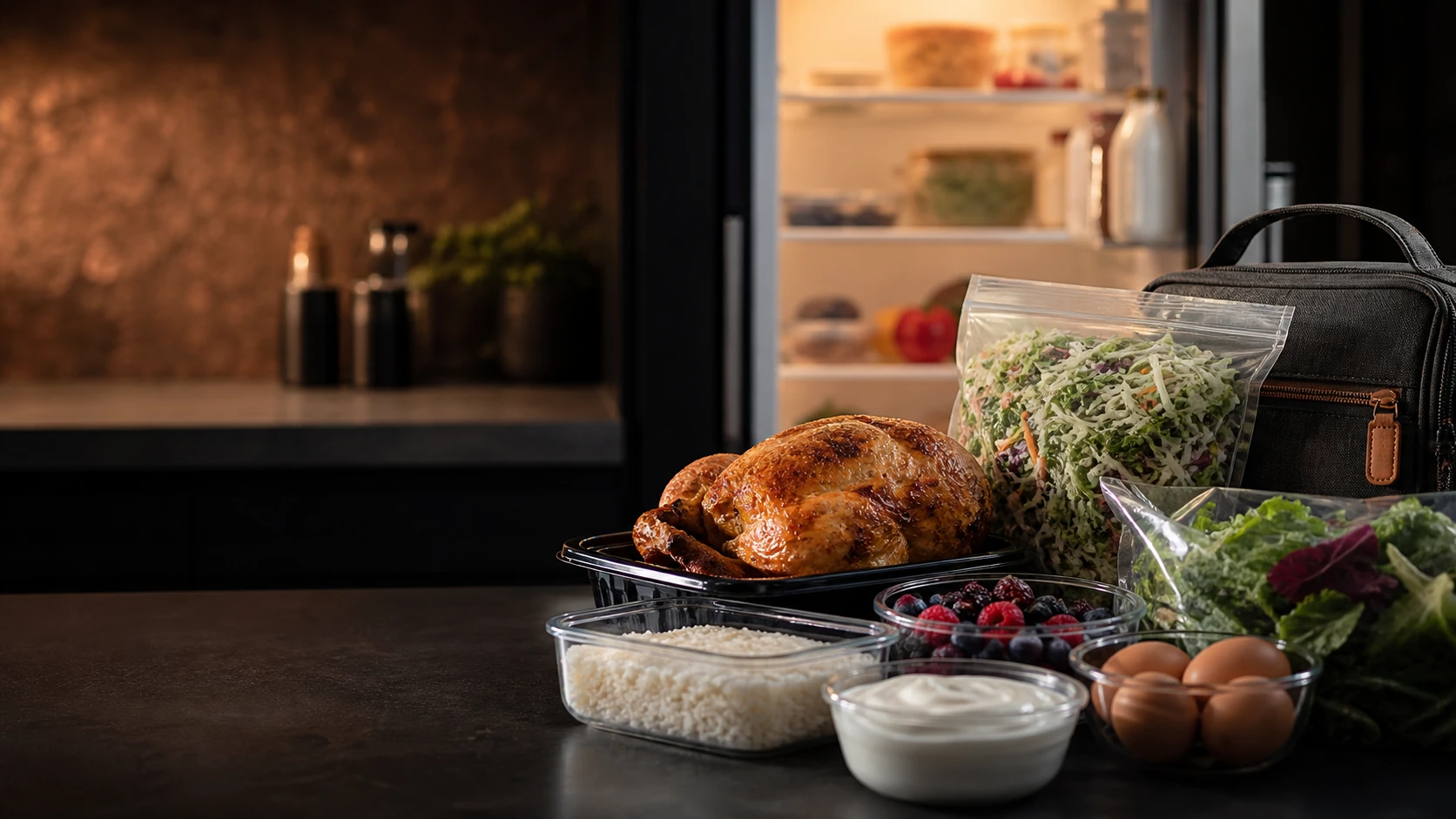
A rotisserie chicken, microwave rice, Greek yogurt, tuna packets, and salad kit are not failures. They are the system doing its job.
The win is opening the fridge at 12:18 and seeing a decision you made while calm. That moment is the whole point.
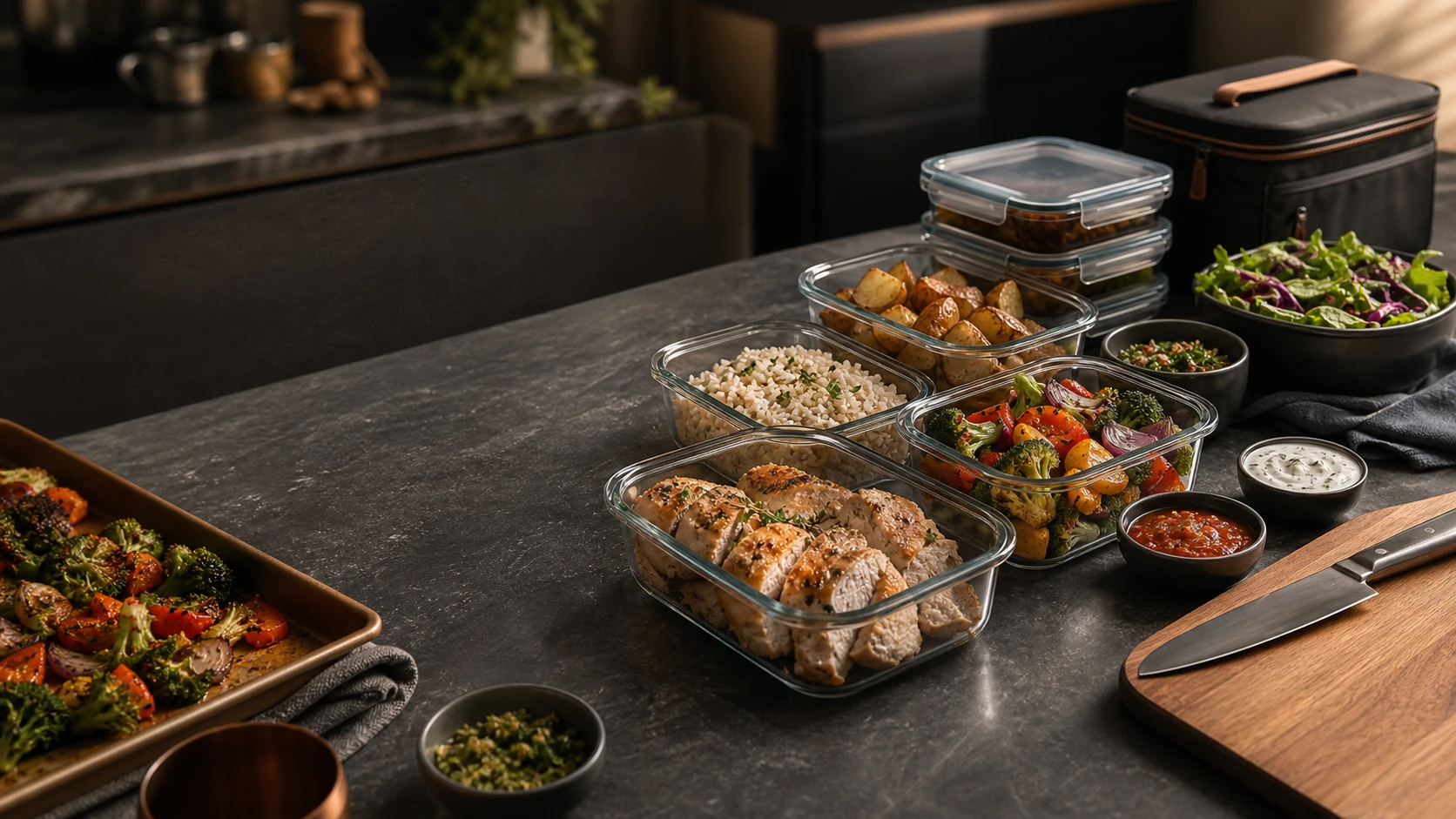
The 90-minute rhythm
Prep components on Sunday. Rescue the week on Wednesday.
Seven identical meals are usually the wrong target. The better rhythm is two touches: build the floor Sunday, then save the back half of the week before Thursday becomes a delivery-app decision.
Cook one protein engine, one base, easy produce, and two flavor levers.
Use the meals that lose quality fastest while the fridge window is strongest.
Freeze overflow, refresh produce, pull a freezer meal down, or use the grocery-store version.
Freezer portions, no-cook shelf meals, or a chosen restaurant rule keep lunch from becoming random.
It respects boredom, food safety, work chaos, and the fact that Sunday is not always available.
Sunday protocol
Cook the hard parts once. Assemble the rest.
The Sunday setup should be boring enough to repeat and flexible enough to eat. Your goal is not five identical containers. Your goal is to remove the five decisions that make Tuesday lunch fall apart.
Pick one main protein and one backup protein. Chicken thighs and eggs, lean beef and Greek yogurt, turkey meatballs and tuna packets, or salmon and cottage cheese all work.
Use rice, potatoes, sweet potatoes, quinoa, whole-grain pasta, beans, or lentils. Microwave rice and canned beans count when the goal is consistency.
Frozen broccoli, frozen peppers, bagged salad, pre-cut slaw, cucumbers, spinach, and steam-in-bag vegetables are all legitimate.
Boring prep usually lacks acid, salt, spice, crunch, or sauce. Choose two flavor levers so the same protein can become more than one lunch.
Make Monday, Tuesday, and Wednesday. A midweek reset beats five identical containers that look tired by Thursday.
Wednesday reset
This is a rescue mission, not another Sunday.
You are not trying to cook from scratch. You are trying to keep Thursday and Friday from turning into takeout by default.
- Buy a rotisserie chicken, microwave rice, and a salad kit.
- Cook one pound of lean ground turkey and add taco seasoning.
- Make chili with canned beans, crushed tomatoes, and ground beef.
- Boil six eggs and restock Greek yogurt.
- Buy pre-cooked grilled chicken strips and frozen vegetables.
- Make tuna-white bean salad for two lunches.
- Order a grocery pickup with protein, vegetables, and a carb base.
Food-safety floor
Do not stretch Sunday into a five-day bet.
The two-touch rhythm is not only more realistic. It is the page's safety floor: cool food in shallow containers, use the fridge early, freeze overflow, and reheat leftovers fully.
Move cooked food into shallow containers instead of leaving a deep pot on the counter.
Refrigerate perishable food within 2 hours, sooner in high heat.
Use or freeze cooked leftovers within about 3 to 4 days.
Keep the refrigerator at 40 F or below and the freezer at 0 F.
Reheat leftovers to 165 F.
Use a thermometer: poultry 165 F, ground meat 160 F, fish 145 F, egg dishes 160 F.
Eight recipe engines
Choose recipes by the job they do.
Start with eight flexible recipe engines because each solves a different failure point: freezer lunch, low-effort protein, fresh office food, family dinner bridge, breakfast default, default work bowl, no-cook lunch, and training-day bowl. Use the macro math as planning estimates, then tighten it with the exact brands, cooked yield, and portion size you actually pack.
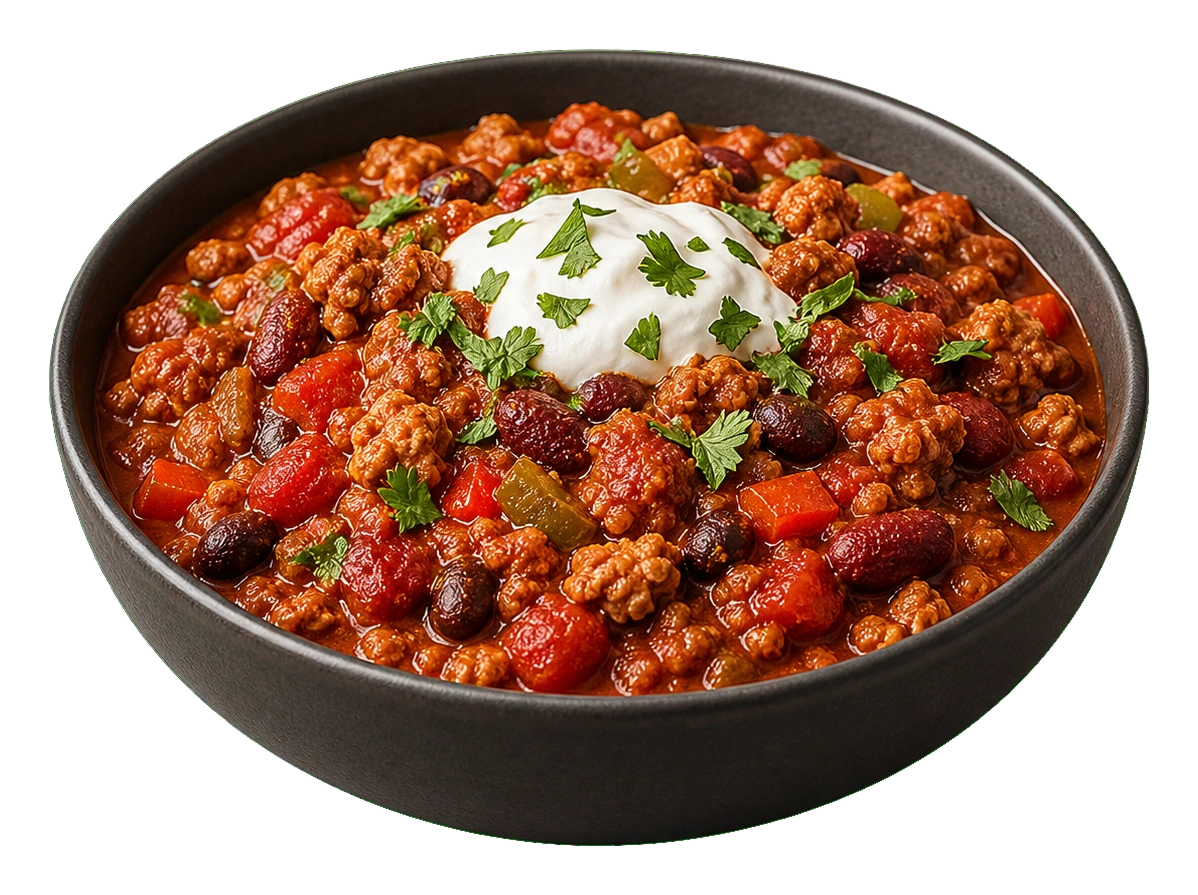 01Turkey and Bean ChiliFreezer-first lunchrecipe
The flagship anti-takeout drawer meal: protein-forward, fiber-forward, inexpensive, forgiving, and freezer-friendly.
About 1.5 cups chili before toppings
- 1,750-1,900 calories
- 135-150g protein
- 190-205g carbs
- 45-60g fat
- 55-65g fiber
- 27-30g protein
- 38-41g carbs
- 9-12g fat
- 11-13g fiber
Planning estimate before Greek yogurt, rice, potatoes, or cheese. Canned-bean drained weight and seasoning sodium move this quickly.
Nutrition estimates are for planning, not medical advice. Sodium, calories, and macros change with brands, drained weights, oil, toppings, and how much food actually lands in each container.
Ingredients
- 1 lb ground turkey
- 1 tablespoon olive oil
- 1 onion, diced
- 1 bell pepper, diced
- 2 cans beans, drained and rinsed
- 1 large can crushed tomatoes
- 2 tablespoons chili seasoning
- Salt, pepper, hot sauce, Greek yogurt, and scallions to finish
Method
- Brown the turkey in olive oil over medium-high heat, breaking it into small pieces.
- Add onion and bell pepper and cook until softened.
- Stir in chili seasoning, beans, and crushed tomatoes.
- Simmer 20 to 25 minutes, then taste and adjust salt, acid, and heat.
- Cool in shallow containers, keep two or three portions in the fridge, and freeze the overflow.
Use it three ways:
- Chili bowl
- Over potato
- With eggs
 02Slow-Cooker Salsa Verde ChickenProtein enginerecipe
One low-effort protein base that can become bowls, tacos, salads, eggs, or baked potatoes.
About 1 cup chicken mixture before rice, tortillas, or salad
- 1,600-1,800 calories
- 195-225g protein
- 90-110g carbs
- 25-45g fat
- 25-32g fiber
- 32-38g protein
- 15-18g carbs
- 4-8g fat
- 4-5g fiber
Planning estimate for the chicken mixture only. Breast lands leaner; thighs, larger jars, and oilier salsa push calories higher.
Nutrition estimates are for planning, not medical advice. Sodium, calories, and macros change with brands, drained weights, oil, toppings, and how much food actually lands in each container.
Ingredients
- 2 lb boneless skinless chicken thighs or breasts
- 1 jar salsa verde
- 1 can black beans, drained and rinsed
- 1 sliced bell pepper
- 1 teaspoon cumin
- Lime, cilantro, cabbage, greens, or rice for serving
Method
- Add chicken, salsa verde, beans, pepper, and cumin to the slow cooker.
- Cook until the chicken reaches 165 F and shreds easily.
- Shred the chicken into the sauce, then brighten with lime.
- Portion some with rice or potatoes and freeze extra chicken in meal-size packs.
- Use fresh greens, cabbage, or cucumber only when serving so the meal stays crisp.
Use it three ways:
- Rice bowl
- Tacos
- Egg scramble
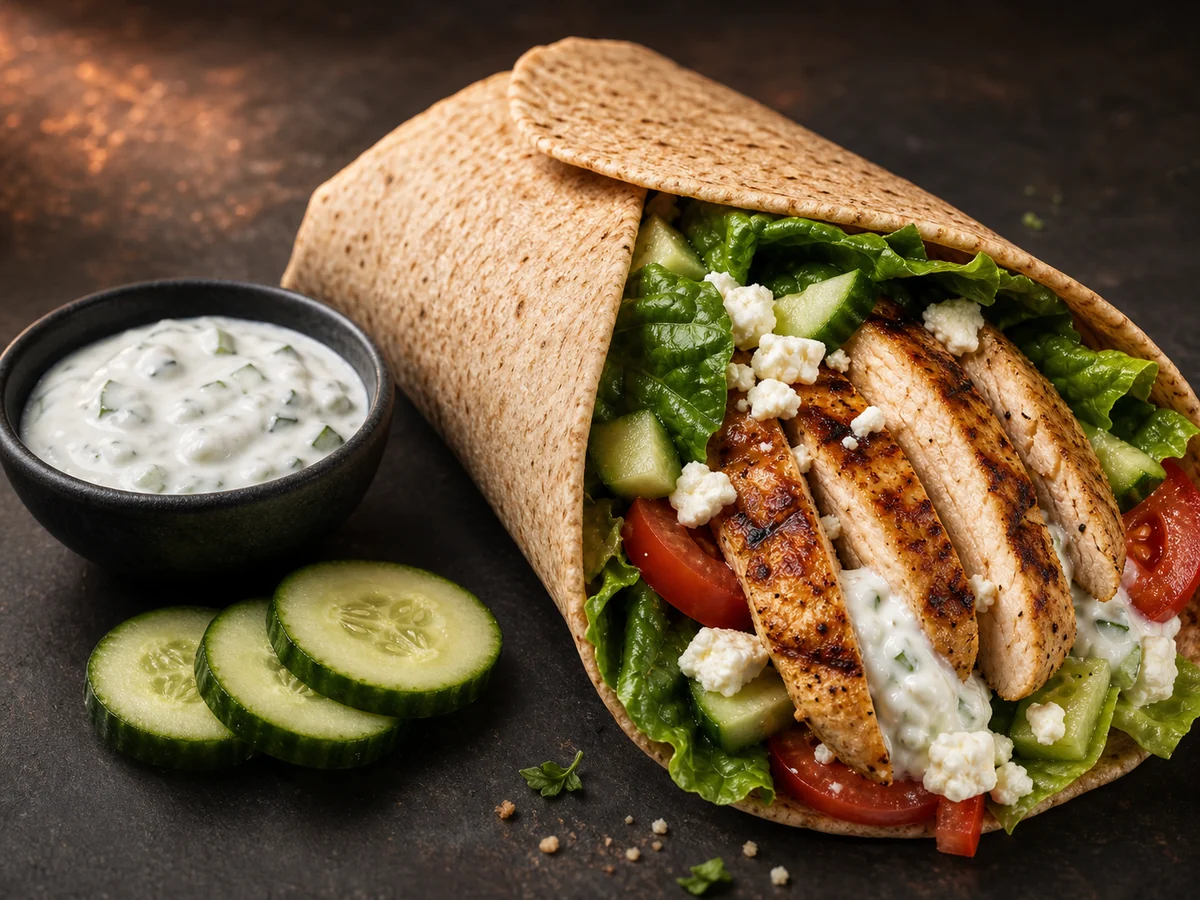 03Greek Chicken Farro BowlsFresh office lunchrecipe
The fresh contrast recipe for Monday through Wednesday, not a five-day fridge endurance test.
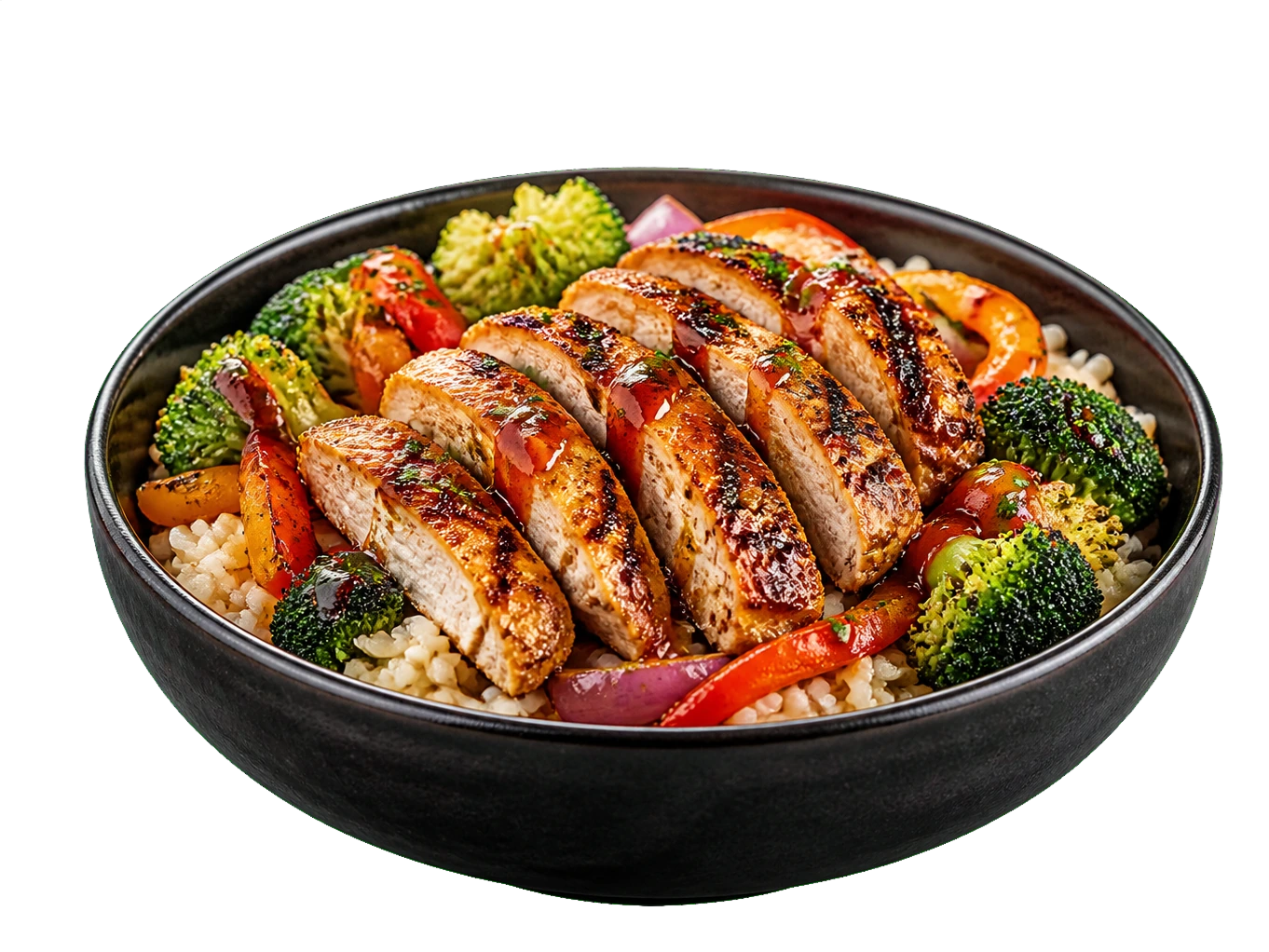
One bowl: sliced chicken, about 1 cup cooked farro, vegetables, and yogurt sauce
- 1,650-1,900 calories
- 175-195g protein
- 145-170g carbs
- 18-45g fat
- 18-25g fiber
- 58-65g protein
- 48-57g carbs
- 6-15g fat
- 5-8g fiber
Planning estimate before feta, olives, pita, or extra olive oil. Thighs raise fat; quinoa or farro brands shift carbs.
Nutrition estimates are for planning, not medical advice. Sodium, calories, and macros change with brands, drained weights, oil, toppings, and how much food actually lands in each container.
Ingredients
- 1.5 lb chicken thighs or breast
- 1 cup dry farro or quinoa
- Cucumber, cherry tomatoes, romaine, and red onion
- Plain Greek yogurt
- Lemon juice, garlic, dill, salt, and pepper
- Feta or olives if they fit your plan
Method
- Cook farro or quinoa, then spread it out so it cools faster.
- Season and cook chicken to 165 F, then slice after resting.
- Mix Greek yogurt with lemon, garlic, dill, salt, and pepper.
- Pack grain and chicken together; keep cucumber, tomato, greens, and sauce separate.
- Assemble at lunch so the bowl still feels fresh instead of damp.
Use it three ways:
- Farro bowl
- Pita wrap
- Salad plate
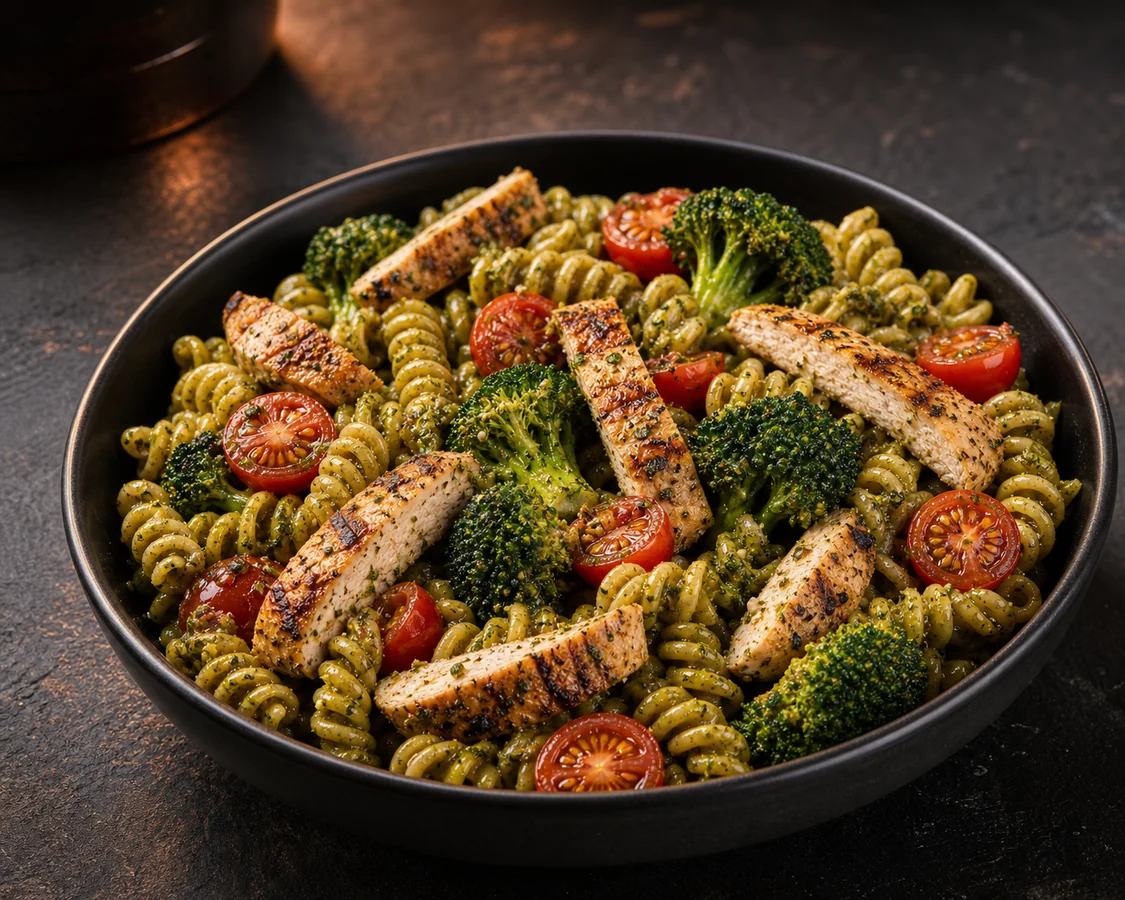 04Turkey-Lentil Meat SauceFamily dinner bridgerecipe
Comfort food that feeds the family, stretches meat with fiber, and freezes as sauce blocks.
About 1 cup sauce before pasta, potatoes, or vegetables
- 1,250-1,650 calories
- 105-120g protein
- 100-135g carbs
- 40-70g fat
- 20-35g fiber
- 18-20g protein
- 17-23g carbs
- 7-12g fat
- 3-6g fiber
Planning estimate for sauce only. Lean turkey sits at the low end; lean beef, oil, or sweeter marinara moves it up.
Nutrition estimates are for planning, not medical advice. Sodium, calories, and macros change with brands, drained weights, oil, toppings, and how much food actually lands in each container.
Ingredients
- 1 lb ground turkey or lean beef
- 1 cup cooked lentils
- 1 jar marinara or crushed tomatoes
- 2 cups spinach
- Garlic, Italian seasoning, and red pepper flakes
- Whole-grain pasta, chickpea pasta, roasted potatoes, or zucchini
Method
- Brown the turkey or beef with garlic and Italian seasoning.
- Add marinara and cooked lentils, then simmer until the sauce thickens.
- Stir in spinach at the end so it wilts without disappearing.
- Serve one dinner portion fresh, then cool and portion the rest as sauce blocks.
- Pair with pasta, potatoes, or vegetables at serving so texture holds.
Use it three ways:
- Pasta dinner
- Over potatoes
- Freezer sauce block
 05Egg, Cottage Cheese, and Vegetable BakeBreakfast defaultrecipe
The morning protein default for the day that starts before your appetite does.
One square, plus fruit, oats, or toast if needed
- 970-1,200 calories
- 85-105g protein
- 18-32g carbs
- 50-72g fat
- 4-7g fiber
- 14-18g protein
- 3-5g carbs
- 9-13g fat
- about 1g fiber
Planning estimate for the bake only. Optional cheese moves the batch toward the high end; fruit, oats, or toast are separate.
Nutrition estimates are for planning, not medical advice. Sodium, calories, and macros change with brands, drained weights, oil, toppings, and how much food actually lands in each container.
Ingredients
- 10 eggs
- 1 cup cottage cheese
- 2 cups spinach
- 1 cup peppers or broccoli
- 1/2 cup shredded cheese if wanted
- Salt, pepper, hot sauce, fruit, oats, or toast on the side
Method
- Whisk eggs and cottage cheese until mostly smooth.
- Fold in vegetables, seasoning, and cheese if using.
- Pour into a greased baking dish and bake until the center reaches 160 F.
- Cool, slice into squares, and keep early-week portions in the fridge.
- Pair with fruit, oats, or toast if the morning needs more fuel.
Use it three ways:
- Breakfast slice
- Lunch backup
- Wrap filling
06Chicken Fajita Rice BowlsDefault work bowlrecipe
The most reliable office bowl: reheats well, tastes better with sauce, and can turn into tacos if dinner needs a bridge.
One bowl with rice, chicken, beans, peppers, onions, and sauce on the side
- 1,850-2,200 calories
- 155-190g protein
- 215-250g carbs
- 20-55g fat
- 25-35g fiber
- 39-48g protein
- 54-63g carbs
- 5-14g fat
- 6-9g fiber
Planning estimate before cheese, avocado, sour cream, or larger rice portions. Breast lands leaner; thighs move fat higher.
Nutrition estimates are for planning, not medical advice. Sodium, calories, and macros change with brands, drained weights, oil, toppings, and how much food actually lands in each container.
Ingredients
- 1.5 lb chicken breast or thighs
- 3 cups cooked rice
- 1 can black beans, drained and rinsed
- 3 cups sliced peppers and onions
- 1 tablespoon olive oil
- Taco seasoning, salsa, lime, cilantro, and Greek yogurt to finish
Method
- Season chicken and cook to 165 F, then rest and slice or shred.
- Cook peppers and onions in olive oil until softened and lightly browned.
- Warm beans with taco seasoning, lime, and a splash of water.
- Build four containers with rice, chicken, beans, peppers, and onions.
- Pack salsa and Greek yogurt separately so the bowl still tastes fresh.
Use it three ways:
- Rice bowl
- Tacos
- Over salad
 07Tuna and White Bean Crunch SaladNo-cook office lunchrecipe
The no-microwave rescue lunch: high protein, high fiber, and fast enough to build when Sunday never happened.
About 1.75 cups tuna-bean salad plus greens or toast if wanted
- 1,150-1,350 calories
- 110-130g protein
- 90-115g carbs
- 28-40g fat
- 22-32g fiber
- 36-43g protein
- 30-38g carbs
- 9-13g fat
- 7-11g fiber
Planning estimate before crackers, toast, mayo, avocado, or extra oil. Tuna packet size and bean drained weight matter.
Nutrition estimates are for planning, not medical advice. Sodium, calories, and macros change with brands, drained weights, oil, toppings, and how much food actually lands in each container.
Ingredients
- 3 tuna packets or drained cans
- 2 cans white beans, drained and rinsed
- Cucumber, celery, parsley, and greens
- 2 tablespoons olive oil
- Lemon juice, Dijon mustard, salt, pepper, and hot sauce
- Whole-grain toast or crackers if the lunch needs more fuel
Method
- Drain tuna and beans well so the salad does not turn watery.
- Stir tuna, beans, cucumber, celery, parsley, lemon, mustard, olive oil, salt, and pepper.
- Pack greens separately or use them as the base only when serving.
- Portion into three lunches and keep crackers or toast separate.
- Add hot sauce or extra lemon at lunch so the meal feels alive.
Use it three ways:
- Over greens
- With toast
- Stuffed in a wrap
 08Beef and Sweet Potato SkilletTraining-day bowlrecipe
A more substantial bowl for training days when a tiny salad would just move hunger to the evening.
One bowl with beef, sweet potato, vegetables, and sauce on the side
- 1,450-1,750 calories
- 95-115g protein
- 130-155g carbs
- 45-70g fat
- 18-26g fiber
- 24-29g protein
- 33-39g carbs
- 11-18g fat
- 4-7g fiber
Planning estimate before avocado, cheese, extra oil, or a larger beef portion. Use the label on your package if precision matters.
Nutrition estimates are for planning, not medical advice. Sodium, calories, and macros change with brands, drained weights, oil, toppings, and how much food actually lands in each container.
Ingredients
- 1 lb 90-93% lean ground beef
- 2 large sweet potatoes, diced
- 2 cups peppers, onions, spinach, or slaw
- 1 tablespoon olive oil
- Smoked paprika, garlic, chili powder, salt, and pepper
- Hot sauce, mustard vinaigrette, or avocado if wanted
Method
- Roast or skillet-cook diced sweet potatoes until tender and browned.
- Brown beef with seasoning, then drain if needed.
- Add peppers, onions, or spinach and cook until just softened.
- Divide into four containers and keep sauce separate.
- Pair with slaw or greens at lunch if you want more volume.
Use it three ways:
- Training-day bowl
- Breakfast hash
- Over slaw
Broken-week fallback matrix
The plan has to survive the week that actually happens.
A serious food system needs escape routes. When prep fails, the answer is not guilt. It is the smallest useful move that keeps lunch from becoming random.
No Sunday cook
Rotisserie chicken, microwave grain, bagged salad, canned beans, fruit, Greek yogurt.
Late meeting
Tuna packet, rice cup, salad kit, olive oil, hot sauce.
No microwave
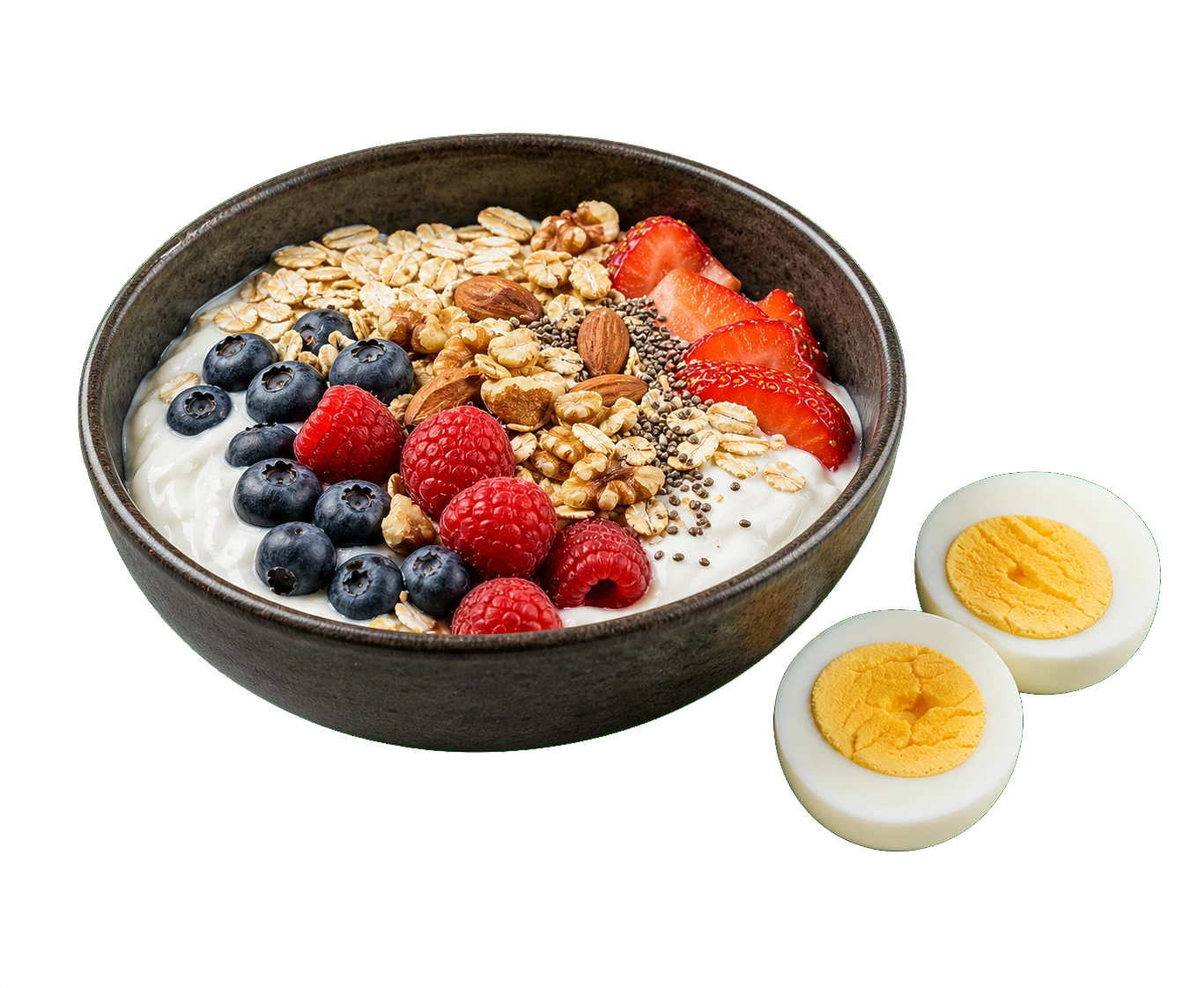
Tuna/chickpea/farro salad or Greek yogurt, oats, berries, nuts, and boiled eggs.
Kids ate leftovers
Pull freezer chili or salsa verde chicken; add microwave potatoes or rice.
Training day failed
Greek yogurt and banana now; protein bowl or chili after training.
Thursday fridge empty
Move one freezer portion to the fridge Wednesday night.
Bored with the same meal
Change sauce, base, or wrapper before changing the whole recipe.
Restaurant needed
Double-protein bowl, beans or vegetables, water, and no giant combo drift.
Freezer strength
- Excellent freezer engines
- Chili, meat sauce, curry, meatballs, salsa verde chicken, soups.
- Freeze with care
- Rice bowls, roasted potatoes, shredded chicken, breakfast wraps, cooked beans.
- Keep fresh instead
- Cucumber, dressed greens, delicate salads, avocado, yogurt sauces, most fish lunches.
- Wednesday move
- Freeze overflow, thaw one portion in the fridge, refresh vegetables, refill sauce.
How much to pack
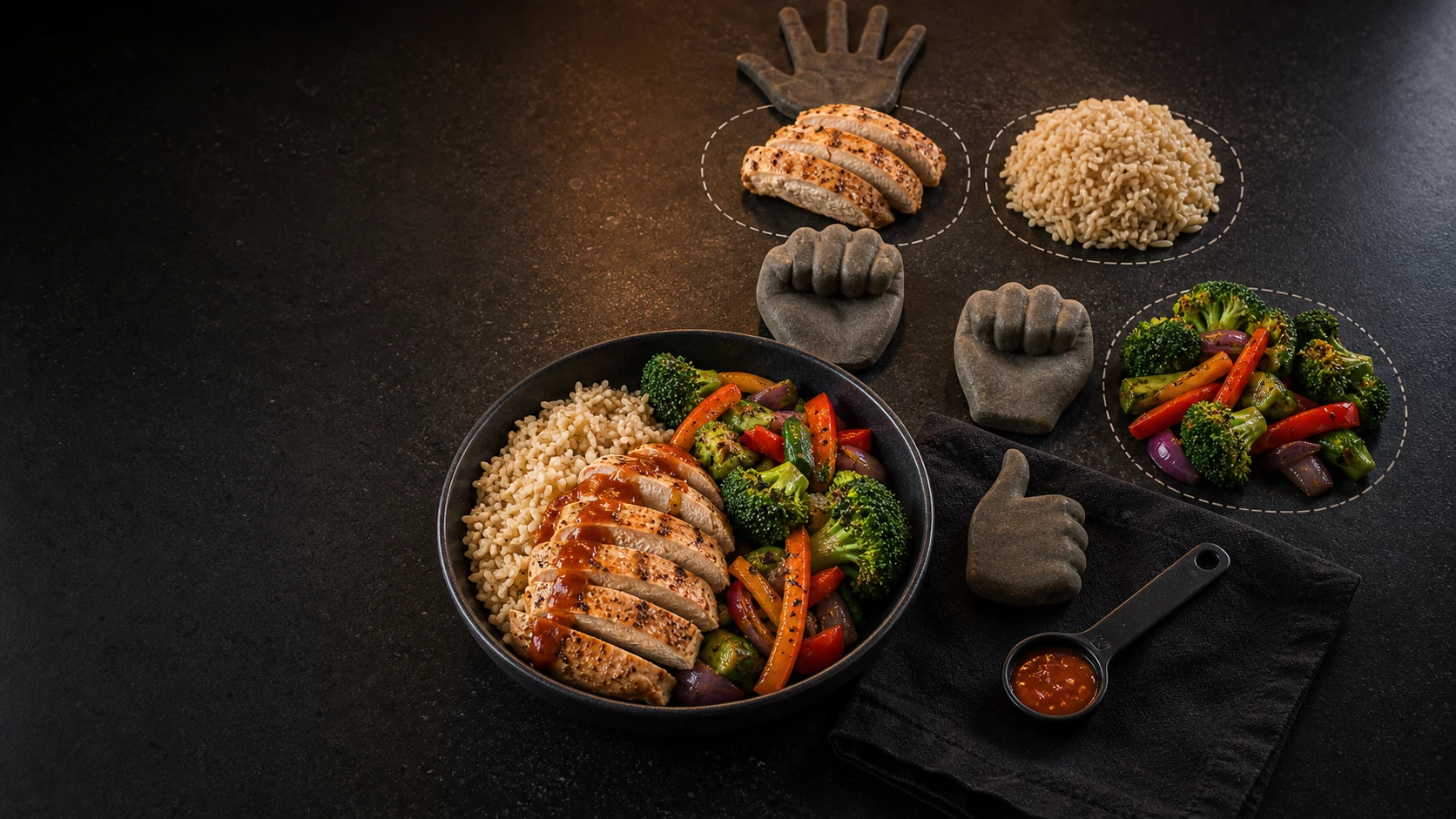
Use the hand method before you use a spreadsheet.
You do not need to track every macro to make lunch work. Keep protein steady, add produce, and adjust carbs or fats based on goal, activity, and hunger later in the day.
Keep this steady.
Use more if active, training, or physically busy.
Vegetables or fruit keep lunch from becoming just fuel.
Enough for flavor without turning lunch into a mystery.
Training-day lunch
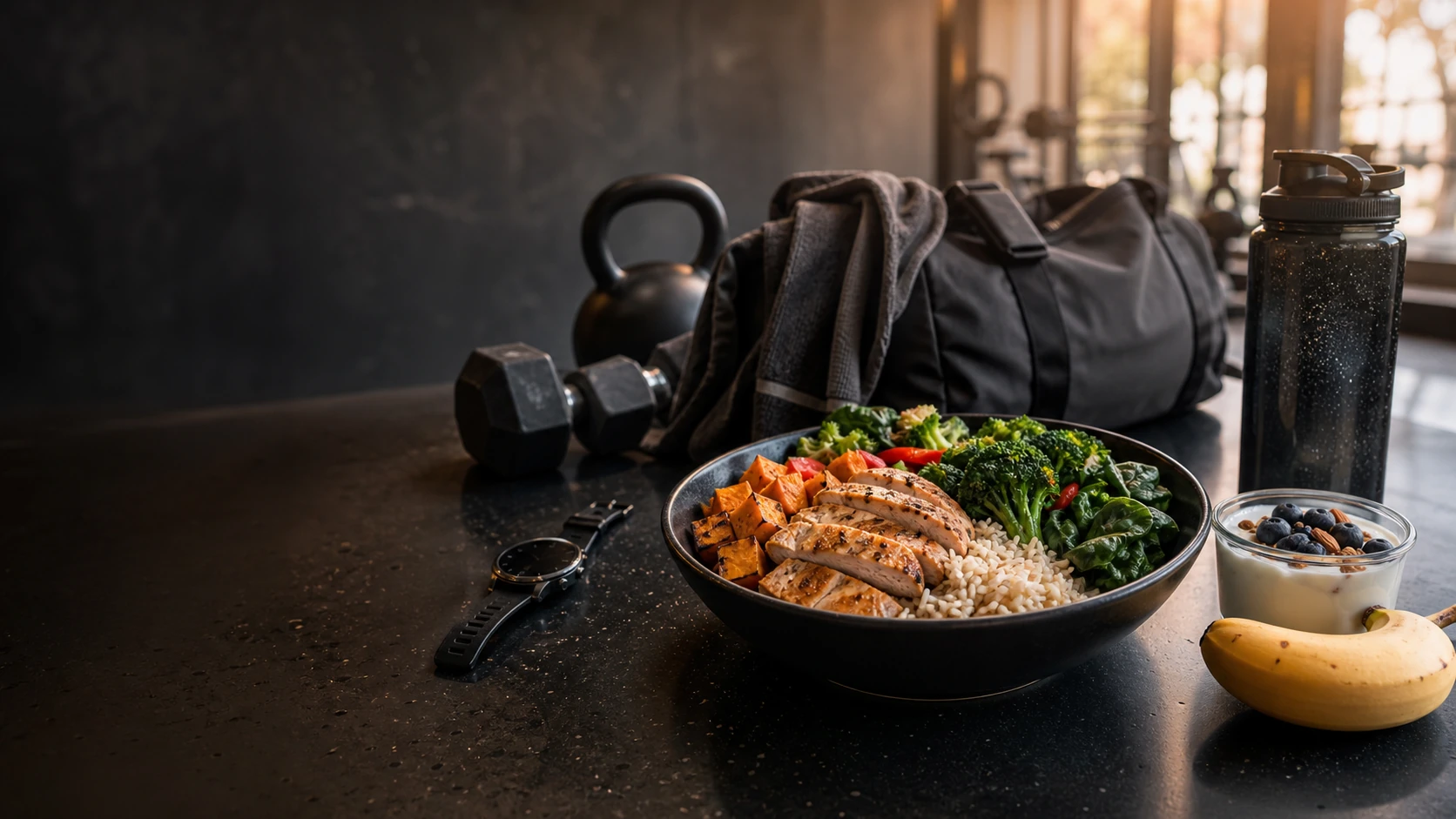
A tiny salad at noon and a hard workout at 5:30 is not discipline.
A good training-day lunch includes a solid protein, a carb source, vegetables, and enough salt and fluid. If you lift after work, a small afternoon snack can prevent the post-training pantry raid.
- Chicken, rice, vegetables, salsa.
- Turkey chili with potatoes.
- Salmon, rice, cucumber, edamame.
- Beef, sweet potato, spinach.
- Greek yogurt, oats, berries, plus eggs.
Grocery lanes, gear criteria, downloads
Buy the system, not random ingredients.
A useful grocery list has protein, bases, produce, flavor, and backup foods. Gear only belongs when it removes friction from that system.
Proteins
- Chicken thighs or breast
- Lean ground turkey or beef
- Eggs
- Greek yogurt
- Cottage cheese
- Tuna or salmon packets
- Rotisserie chicken
- Turkey meatballs
- Salmon
- Beans or lentils
- Tofu or tempeh
Carbs and bases
- Rice
- Potatoes
- Sweet potatoes
- Quinoa
- Oats
- Whole-grain wraps
- Whole-grain pasta
- Microwave rice
- Beans
Vegetables and fruit
- Frozen broccoli
- Frozen peppers and onions
- Bagged salad
- Slaw mix
- Spinach
- Cucumbers
- Cherry tomatoes
- Baby carrots
- Berries
- Apples
- Bananas
Flavor
- Salsa
- Hot sauce
- Pesto
- Tzatziki
- Hummus
- Soy sauce
- Mustard
- Olive oil
- Lemon
- Garlic
- Taco seasoning
- Chili seasoning
- Low-sugar barbecue sauce
Backup foods
- Protein powder
- Jerky
- Nuts
- Oatmeal packets
- Canned soup
- Whole-grain crackers
- Shelf-stable tuna
- Electrolytes
Gear criteria
Gear that removes friction
- Glass containers
- Portion and cool lunches in visible, reheatable containers.
- Sauce cups
- Keep sauces separate so bowls and salads survive the workday.
- Freezer labels
- Date the batch before it becomes a mystery block.
- Instant-read thermometer
- Verify poultry, ground meat, egg dishes, fish, and leftovers.
- Lunch bag + ice packs
- Support commuting and office storage when a fridge is not guaranteed.
- Sheet pan or slow cooker
- Increase Sunday throughput without turning prep into a second job.
This is criteria, not a random shopping shelf. The point is to choose tools that make the system easier, not to buy a kitchen full of gadgets.
Earned gear picks
Two tools that make the system easier.
The useful purchases are not a kitchen reset. One keeps lunches visible and portable; the other helps the food-safety floor stay real when poultry, ground meat, fish, egg dishes, and leftovers need temperature checks.
 View on Amazon
Visible fridge storage for the three-lunch system
Rubbermaid Brilliance Glass Set
Use glass containers when the plan depends on seeing, cooling, reheating, and carrying real lunches. This earns its spot because the system fails faster when cooked food disappears into opaque leftovers or mismatched lids.
 View on Amazon
Temperature check for the food-safety floor
TempPro TP19H Instant-Read Thermometer
Use an instant-read thermometer when the system depends on cooking poultry, ground meat, fish, egg dishes, and reheating leftovers to safe temperatures instead of guessing by color.
Printable support
Make Sunday easier to repeat.
Use these as the checklist set: one-page prompts for the fridge, freezer, grocery list, and the week that refuses to cooperate.
Pick one protein, one base, one vegetable, one sauce, and one freezer backup.
A two-touch rhythm that makes the fridge safer and Thursday easier.
The fallback sheet for no Sunday cook, no microwave, late meetings, and empty fridge days.
Track portions, cook dates, thaw dates, and what needs to be used next.
The short rules: shallow containers, 2 hours, 4 days, 165 F reheating.
Choose recipes by job: freezer, protein engine, fresh office, default bowl, no-cook rescue, family bridge, training day, and breakfast.
A realistic week
Not perfect. Successful.
The win is Tuesday at 12:40, when work is busy, you are hungry, and you already have a real lunch ready.
Cook chicken thighs, make rice, roast frozen broccoli and peppers, boil six eggs, build three lunches.
Chicken fajita bowl. Greek yogurt in the afternoon if needed.
Chicken, rice, broccoli, pesto. Fruit on the side.
Last prepared lunch. Buy rotisserie chicken, bagged salad, and microwave potatoes.
Rotisserie chicken salad bowl with potatoes.
Emergency restaurant order: double-protein bowl with beans, vegetables, salsa, and water.
Prepping too many identical meals
Five containers sound efficient until you hate them by Wednesday. Prep three meals and keep components ready.
Forgetting flavor
Sauce is adherence. Add salsa, hot sauce, lemon, yogurt sauce, pesto, or vinaigrette.
Making lunch too small
A lunch that looks disciplined can still fail if it leaves you hunting snacks all evening.
Ignoring the backup plan
You will miss prep. Stock the shelf and choose the emergency order before you need it.
Turning meal prep into an identity
You are not on meal prep. You are just making lunch easier.
Where this fits
Lunch is one rail, not the whole system.
Midday structure works best when it connects to the rest of the week. If sleep is the bottleneck, protect the evening. If training is the anchor, pack around the session. If labs changed the plan, turn the data into repeatable meals.
Use the fatherhood system when sleep, family logistics, training windows, caffeine, and social nights are all colliding at once.
If you lift after workConnect the lunch to the training plan.Use the strength guide for the bigger question: how protein, recovery checks, progressive resistance, and schedule reality fit together after 40.
If labs changed the planLet bloodwork shape the next nutrition decision.Use the biomarker article when food choices, omega-3, fiber, training, and retesting need to become one measured follow-through loop.
If workouts keep redliningUse heart-rate zones to make training recoverable.Use the Zone 2 / Zone 4 article when meal timing, recovery, and effort control need to support the same week.
Evidence-aware standards
Useful claims, sourced carefully.
The strongest claims here are modest: protein distribution matters, produce and fiber are useful foundations, and cooked food has safety windows. That is enough to build a better lunch system without pretending meal prep is medicine.
USDA FoodData Central
Recipe macro ranges were checked against FoodData Central standard entries for common ingredients such as ground turkey, chicken, lean beef, tuna, cooked beans, sweet potatoes, crushed tomatoes, olive oil, cottage cheese, eggs, and cooked grains.
SourceNational Resource Center on Nutrition & Aging
Protein supports muscle maintenance and physical function in older adults. The adult RDA is 0.8 g/kg, while research discussed by the center suggests many older adults may benefit from 1.0-1.2 g/kg, with kidney-disease caveats and resistance training context.
SourceWHO healthy diet fact sheet
WHO emphasizes adequacy, balance, moderation, diversity, minimally processed foods, fruits, vegetables, pulses, whole grains, and enough dietary fiber.
SourceUSDA FSIS leftovers and food safety
FSIS recommends prompt refrigeration, shallow containers for cooling, a common 3- to 4-day refrigerator window for leftovers, and reheating leftovers to 165 F.
SourceUSDA FSIS food safety basics
FSIS food-safety basics reinforce the two-hour room-temperature rule, shallow-container cooling, 40 F or below refrigeration, and 165 F reheating for leftovers.
FAQ
Common meal prep questions.
Short answers for the things that usually derail the system.
What is the simplest meal prep system for men over 40?
Start with lunch. Cook one protein anchor, prep one base, keep easy vegetables available, add sauce, build three lunches, and keep a no-cook backup shelf. The goal is to make the better choice easier before the workday gets messy.
How many lunches should I prep at once?
Three lunches is the practical starting point: Monday, Tuesday, and Wednesday. Then use a small Wednesday reset for Thursday and Friday. That rhythm is easier to tolerate and fits USDA FSIS leftover guidance better than stretching one Sunday cook across the whole week.
Do I need to track macros?
No. Tracking can help specific goals, but the basic system works without it. Use a protein anchor, a fiber or vegetable base, a reasonable carb portion, and a backup plan. If dinner hunger is out of control, lunch may be too small or too low in protein and fiber.
What should I pack on training days?
Use a solid protein, a carb source, vegetables, and enough fluid and salt. If you lift after work, add an afternoon snack such as Greek yogurt, a banana, cottage cheese, a protein shake, or a turkey wrap.
Is rotisserie chicken or microwave rice cheating?
No. The system is built for normal life. Rotisserie chicken, microwave rice, frozen vegetables, canned beans, and salad kits can keep Thursday and Friday from becoming random takeout by default.
Is this medical nutrition advice?
No. This page is educational. If you have diabetes, kidney disease, a history of disordered eating, major weight changes, medication issues, or clinical nutrition targets, work with a qualified clinician or registered dietitian.
Bottom line
Meal prep is insurance against the tired version of you.
Cook protein. Prepare a base. Keep vegetables easy. Add sauce. Build three lunches. Reset midweek. Have an emergency order. Then move to the next part of the system only if it is the part that actually needs attention. The win is not becoming a meal-prep person. The win is Tuesday at 12:40, when work is loud, hunger is real, and the better choice is already there.
See the bloodwork story that made prevention more concrete.
Strength Training After 40Connect lunch to muscle retention and training consistency.
Fitness Systems for Busy FathersMake food, sleep, and training survive family logistics.
Advanced Bloodwork After 40See how food, training, and retesting connect.