The owner’s decision · epix Pro (Gen 2) 51mm
Apple Watch Ultra 4 vs my epix Pro (Gen 2).
I built my training and recovery routine around the 51mm Sapphire epix Pro (Gen 2). Apple’s new flagship has to earn its place in that routine.
· 8 min read
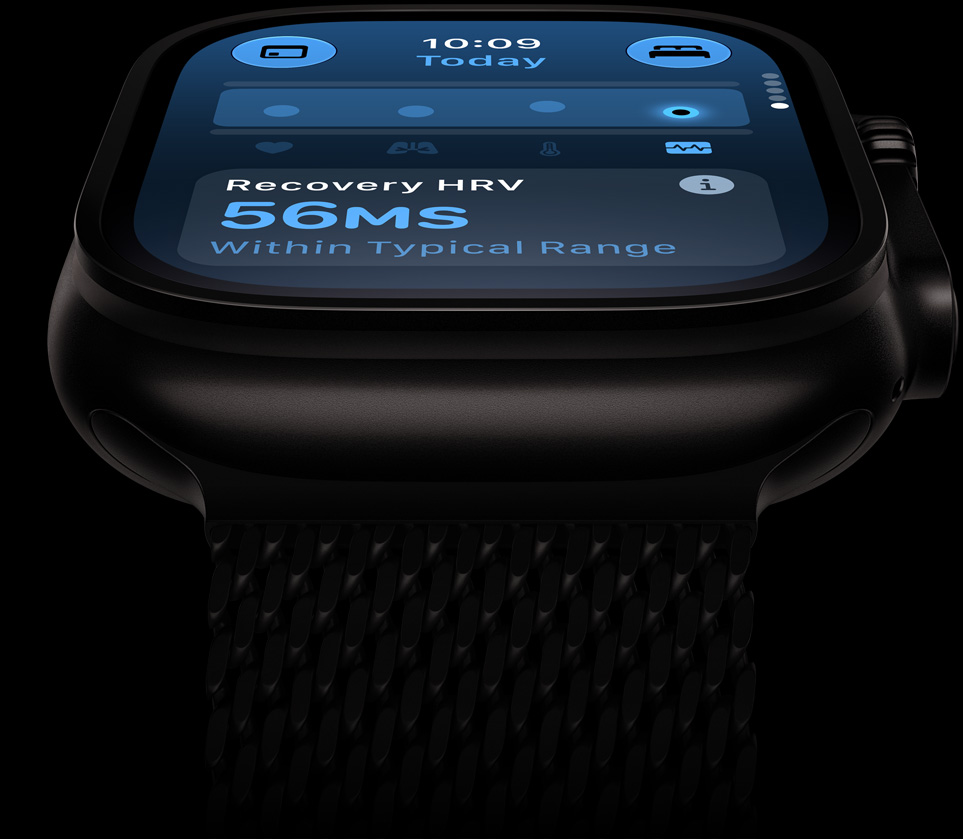
Owner-informed announced-spec comparison checked September 11, 2026. JC owns and funded the Garmin epix Pro (Gen 2) Sapphire Edition 51mm reviewed here. Iron & Threads has not worn or tested Apple Watch Ultra 4, verified its battery, or compared the two watches simultaneously. No product score is assigned. Editorial methodology.
01 / The honest starting line
One watch has a history on my wrist. The other has a launch page.
I bought the Garmin epix Pro (Gen 2) Sapphire Edition in the 51mm size with my own money. My long-term epix review records what made it stick: AMOLED data I can read while moving, low charging friction, overnight HRV, Training Readiness, zones, maps, and the dedicated LED. The exact size matters because Garmin changes dimensions and battery across the family; every Garmin figure here uses the 51mm model.
I have not worn Apple Watch Ultra 4 or tested its sensor. Apple opened preorders September 9 and says stores receive it September 18 at $799. Apple’s announcement. This is an owner’s switching decision built from a known Garmin and announced Apple specifications, not a scored hands-on contest.
That gives this page a different job from our Ultra 4 versus fēnix 9 Pro comparison. The flagship comparison helps a new buyer. This one asks what I would gain, what I would interrupt, and which new capability could justify replacing a system that already corrected my behavior.
02 / The decision table
The upgrade is not where the feature list says it is.
| Decision | My epix Pro (Gen 2) Sapphire 51mm | Apple Watch Ultra 4 |
|---|---|---|
| Case on the wrist | 51 × 51 × 14.9mm; 60g case-only or 88g with Garmin’s silicone band. Exact Garmin product. | 49 × 44 × 12mm and 63.0/63.1g; requires iPhone 11 or later, including iPhone SE (2nd generation) or later, on iOS 27. Apple specifications. Slimmer, but not proven lighter on the same basis. |
| Charging rhythm | A published multiweek envelope supports the habit I already keep. | Apple rates normal use at up to 50 hours; a 15-minute charge can add up to 18 hours. Apple Watch battery. |
| Recovery layer | Sleeping wrist-HR data becomes a seven-day HRV average against a personal range after three weeks of consistent sleep data. | Apple says HRV can be sampled as often as every five minutes, Recovery HRV is baseline-relative, and the 0–10 Readiness score updates during the day. Ultra 4 health features. |
| Training loop | Training Readiness, Training Status, load, recovery time, custom workouts, zone targets, maps, and a dedicated LED are already part of my routine. | Apple lists custom workouts, zones, target alerts, training load, VO₂ max, and offline maps. Apple specifications. Those remain untested by me. |
| Connection away from a phone | Training and maps work on the watch, but Garmin’s assistance and incident features require a Bluetooth-connected phone with data coverage. | Cellular can handle calls and data with an active compatible plan; satellite adds an off-grid safety path with separate limits. |
Two traps remain. Garmin’s 88 grams includes its band, so it cannot be compared directly with Apple’s listed watch weight. And matching labels do not create matching systems: HRV, readiness, VO₂ max, zones, and maps can differ in collection, scoring, and use.
03 / Adherence
A watch cannot build a baseline from the charger.
Battery removed the small negotiation that had caused me to wear an older watch less often. Infrequent charging lets overnight data survive busy evenings and early starts. That makes endurance a health feature: a sensor cannot interpret a night it spends on the charger.
For this exact 51mm epix, Garmin publishes up to 31 days in smartwatch mode with wrist gesture or 11 days always-on. Its separate GPS-only mode is up to 82 hours with wrist gesture or 58 hours always-on. Garmin’s 51mm battery table. Sensors, notifications, GPS, and display behavior change actual life. These are Garmin maximums, not my measured runtime.
Ultra 4 answers with a shorter cycle and faster top-ups. A breakfast charge might preserve sleep wear, or it might restore the decision I paid to remove. Our current-flagship comparison carries the workout-mode breakdown. My question is whether fast charging would keep the watch on my wrist as consistently as a multiweek envelope. Only use can answer it.
04 / Recovery
More samples do not carry my Garmin baseline across the aisle.
Garmin’s HRV Status manual says the epix analyzes wrist heart rate during sleep, requires three weeks of consistent sleep data, and grades a seven-day average against a personal range. My HRV after 40 guide applies that context: one night can be noise; a trend matters when it agrees with training, sleep, stress, or how the session feels.
A switch changes the measuring and interpretation system. Apple’s Recovery HRV and Garmin’s HRV Status should not be spliced into one chart or judged by whose number looks higher. Preserve the Garmin history, establish Apple’s context, and compare decisions and repeatable workouts before displayed values.
Garmin’s Training Readiness documentation names last-night sleep score, recovery time, HRV Status, acute load, three nights of sleep, and three days of stress as inputs; the score updates through the day. I know how that layer behaves around my schedule. Apple’s presentation could prove clearer, but only if it improves a real choice.
- Keep each platform’s HRV and readiness history separate; compare direction and context rather than raw scores.
- Wear the candidate through ordinary sleep, work, lifting, Zone 2, and intervals before judging adherence.
- Check whether a recommendation explains its drivers and improves the plan.
- Treat symptoms and medical concerns as clinical questions. Neither readiness score clears someone for exercise.
My twelve-week field report gives continuity practical weight: during a consistent Zone 2 and Zone 4 block, overnight HRV rose about 25 percent above baseline and held for five days while resting heart rate reached 49 and lifting continued. It is one person’s record, not proof that Garmin caused the change, but its context is worth protecting.
05 / The cockpit
The winning metric is the one that interrupts the wrong workout.
My Garmin performs a concrete job. I can build a workout, alternate 3:30 in Zone 4 with 2:30 in Zone 2, and hear headphone alerts when I drift. The Zone 2 and Zone 4 training story documents that workflow. The watch interrupts the persuasive idea that every run should become a hard run.
The epix manual documents guided multistep, interval, target, saved, and Garmin Connect workouts. Starting a workout. Its Training Status manual combines changes in VO₂ max, acute load, and HRV over time; load focus examines four weeks. Garmin’s depth can feel intimidating, but it is already familiar.
VO₂ max is where familiarity once failed me. For months, my epix graded me against a max heart rate that was wrong. The result became useful only after I corrected the input and read the four-to-six-week trend. My VO₂ max guide tells that story. Garmin calls the output an estimate based on wrist or chest-strap heart rate and qualifying outdoor running, or cycling with a power meter. Garmin VO₂ max manual.
Ultra 4 has enough training features that dismissing it as a lifestyle watch would be lazy. Its controls, cues, recovery explanation, and charging rhythm still have to make my sessions easier. Our heart-rate-zones guide supplies the test for either device: verify profile and max-HR assumptions, then use effort and repeatable sessions to catch a polished but wrong result.
06 / The credible switch case
Ultra 4 asks whether I want to leave the phone, not the training plan.
The epix gives me maps, on-watch training data, and a flashlight without turning my wrist into a second phone. Its dedicated LED became useful in early mornings, dark rooms, and red-light use near sleep. Garmin’s exact 51mm Sapphire page confirms multi-band GPS, preloaded maps, and the LED. Garmin product 884088.
Garmin’s safety boundary is sharp. Epix assistance and incident detection require Bluetooth connection to Garmin Connect on a phone with data and network coverage; Garmin says the app does not contact emergency services itself. Garmin safety manual. For phone-free training, that dependency can matter more than another recovery chart.
With an active compatible plan, Apple’s cellular watch can call and use data away from iPhone; carrier and country support vary. Apple cellular support. Satellite adds emergency texting, Messages, and location sharing in supported regions with a clear view of the sky. Find My and Messages require a carrier plan; satellite SMS also needs the paired iPhone powered and online, though it need not be nearby. Apple satellite support. That changes what the watch can do when the phone is absent, with dependencies worth checking before relying on it.
If I keep carrying my phone, the gain narrows. If I need family access or an emergency path during solo training without it, the gain becomes substantial. That use case stands without pretending Apple has proved a better HRV score or ignoring satellite conditions.
07 / Beyond the watch
A cleaner health home would help. It still has to ship.
Apple says a redesigned Health app arrives later in 2026, initially in U.S. English, with Longevity, Health Age, Insights, Movement Evaluations, and Quest lab access; compatible Apple Intelligence hardware and feature limits apply. Apple’s health roadmap. These are future ecosystem features, not launch-day test results. Our Apple launch analysis separates the watch release from those later app promises.
I already have a lab workflow documented in the Function Health review. A consolidated Apple view could reduce dashboard friction, but a watch does not replace bloodwork. A useful system keeps wearable estimates, laboratory results, symptoms, and clinical interpretation in their proper lanes.
The switching cost exceeds moving files. My Garmin history contains conditions around the numbers and my learned response. Some records may be exportable, but baseline-relative statuses are not interchangeable. I would preserve both records and bridge them with comparable workouts, sleep wear, and written context.
08 / Keep, trial, or wait
I am keeping the epix until Ultra 4 solves a problem I can name.
| Choice | Choose it when | What must stay honest |
|---|---|---|
| Keep the epix | Multiweek battery, Garmin history, custom-zone execution, maps, and the dedicated LED already support the routine. | Do not confuse familiar with perfect. Recheck profile inputs and use trends rather than obeying scores. |
| Trial Ultra 4 later | Cellular or satellite access, a slimmer case, fast top-ups, and iPhone integration solve an actual recurring problem. | Test sleep adherence, workout controls, explanations, and baseline formation before replacing the Garmin. |
| Wait | The only pressure to move is more frequent sampling, a newer readiness screen, or fear that the epix became obsolete overnight. | Wait for shipped hardware and evidence from the exact feature that would justify the change. |
My answer today is keep. The epix is older, but it helps me execute the work. Ultra 4 attacks connection, charging, and recovery presentation together. Those gains matter only if they fit my routine and improve decisions rather than merely increasing the flow of numbers.
If I test Ultra 4 later, the standard is practical: does it stay on through sleep, keep a planned zone session honest, explain recovery changes, and make leaving the phone behind safer? Until then, I would rather keep a known system than borrow confidence from launch material.
Before you choose
Does Apple Watch Ultra 4 make the Garmin epix Pro Gen 2 obsolete?
No. Ultra 4 strengthens the connected-safety and iPhone case, while the epix Pro 51mm retains long published battery life, HRV Status, Training Readiness, custom workouts, maps, multi-band GPS, and a dedicated LED. An established Garmin routine does not expire on announcement day.
Is Apple Watch Ultra 4 HRV better than Garmin HRV Status?
That is not established. Apple promises more frequent sampling and Recovery HRV; Garmin uses sleep data, a three-week baseline, and a seven-day average. Different methods make raw values poor head-to-head scores. Judge consistency, explanation, and the resulting recovery decision.
Should an epix Pro 51mm owner switch to Apple Watch Ultra 4?
Keep the epix if battery adherence, Garmin history, zone workouts, maps, and recovery tools fit. Trial Ultra 4 after release if cellular or satellite access, its slimmer case, fast charging, or iPhone integration fixes a recurring problem. This remains provisional because Iron & Threads has not tested Ultra 4.
Sources & method
This comparison separates JC’s documented, self-funded experience with the exact Garmin epix Pro (Gen 2) Sapphire Edition 51mm from Apple’s announced Ultra 4 specifications. Garmin model-dependent figures come from the 51mm column or product ID 884088; Apple claims remain attributed and launch-state limitations stay visible. Battery modes are not treated as equivalent tests, cross-platform health scores are not compared numerically, and the twelve-week field report is presented as one person’s record rather than causal proof. Sources were checked September 11, 2026. No Apple test unit, affiliate conclusion, formal score, clinician review, or paid Apple link informed the verdict.
- Apple Watch Ultra 4Apple · Accessed September 11, 2026
Manufacturer product presentation for Recovery HRV, Readiness, training, mapping, and product imagery. Claims remain unverified by Iron & Threads.
- Apple Watch Ultra 4 — Technical SpecificationsApple · Accessed September 11, 2026
Manufacturer dimensions, listed weight, phone requirement, and supported training features.
- Apple Watch BatteryApple · Accessed September 11, 2026
Ultra 4 manufacturer battery and fast-charging figures with Apple’s test conditions and variability caveat.
- Apple unveils Apple Watch Ultra 4Apple Newsroom · September 9, 2026
Manufacturer announcement for preorder status, September 18 availability, starting price, and launch footnotes.
- Apple advances health and fitness capabilities using Apple IntelligenceApple Newsroom · September 9, 2026
Later-2026 Health app roadmap, Health Age, Movement Evaluations, Quest access, and eligibility limits.
- Apple Watch GPS + CellularApple · Accessed September 11, 2026
Carrier-plan and regional conditions for calls, messages, and data away from iPhone.
- Connect to a satellite with your Apple Watch Ultra 3Apple Support · May 19, 2026
Operational limits for the satellite feature Apple’s Ultra 4 announcement says is available on Ultra 3 or later.
- epix Pro (Gen 2) — Sapphire Edition, 51mmGarmin · Accessed September 11, 2026
Exact linked 51mm Sapphire configuration, product ID 884088, including display, mapping, multi-band GPS and dedicated LED.
- epix (Gen 2) Standard/Pro Series — Battery InformationGarmin Owner’s Manual, version 12 · August 2025
Exact 51mm column for smartwatch, always-on and GPS-only maximums, with Garmin’s variability caveat.
- epix (Gen 2) Standard/Pro Series — Heart Rate Variability StatusGarmin Owner’s Manual, version 12 · August 2025
Sleep measurement, three-week baseline requirement, seven-day average and HRV status categories.
- epix (Gen 2) Standard/Pro Series — Training ReadinessGarmin Owner’s Manual, version 12 · August 2025
Garmin’s documented readiness inputs and throughout-the-day update behavior.
- epix (Gen 2) Standard/Pro Series — Training StatusGarmin Owner’s Manual, version 12 · August 2025
VO2 max, acute-load and HRV basis; four-week load focus and recovery context.
- epix (Gen 2) Standard/Pro Series — About VO2 Max EstimatesGarmin Owner’s Manual, version 12 · August 2025
Estimate requirements for running and cycling, heart-rate inputs, and age/sex comparison.
- epix (Gen 2) Standard/Pro Series — Starting a WorkoutGarmin Owner’s Manual, version 12 · August 2025
Guided, interval, target, saved and calendar workout support.
- epix (Gen 2) Standard/Pro Series — Safety and Tracking FeaturesGarmin Owner’s Manual, version 12 · August 2025
Paired-phone, data coverage, assistance and incident-detection limitations.
- Garmin epix Pro Gen 2 Sapphire Edition 51mm ReviewIron & Threads · JC · April 27, 2026; updated July 16, 2026
Self-funded ownership statement and first-person battery, display, recovery, training, maps and flashlight conclusions.
- Zone 2 and Zone 4 Training After 40Iron & Threads · JC · April 28, 2026
First-person custom workout, interval structure and headphone-alert workflow.
- Zone 2 Training Results: 12 WeeksIron & Threads · JC · June 10, 2026
One-person field report for the HRV, resting-heart-rate and training-continuity observations.
- VO2 Max After 40Iron & Threads · JC · June 10, 2026
First-person wrong-max-HR failure mode and four-to-six-week trend interpretation.
- Function Health ReviewIron & Threads · JC · Accessed September 11, 2026
JC’s existing laboratory-data workflow and boundary between wearable estimates and bloodwork.
See our correction standards and health reporting boundaries.
The system behind the watch